A Vacuum Fluorescent Display (VFD) [Figure 1] is a display technology based on the same operating principle as a cathode ray tube (CRT). Its primary control element is a grid with a controllable voltage. Electrons emitted from the cathode are accelerated toward the anode by the electric field of the control grid. When the electrons strike the phosphor-coated anode, visible light with a specific wavelength distribution is emitted. The display brightness can be adjusted by controlling the grid voltage. Multiple vacuum fluorescent display elements are arranged in arrays or predefined patterns to form a VFD.
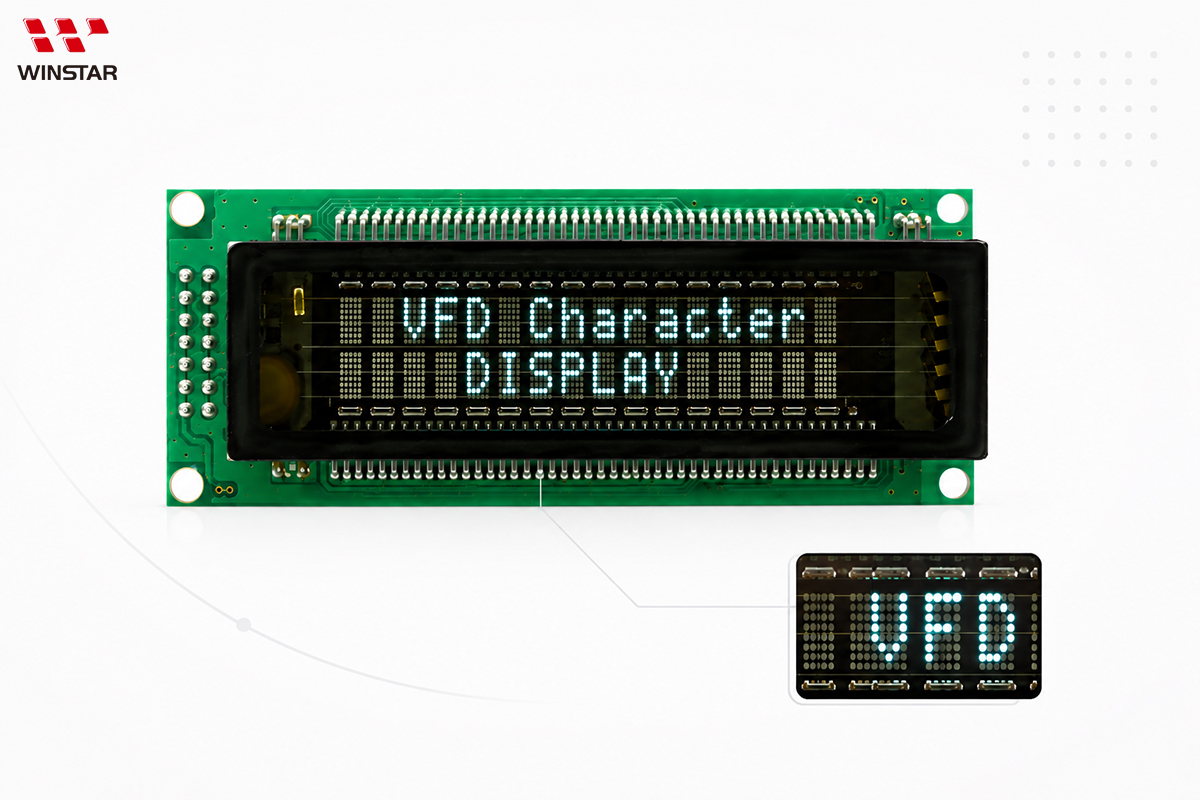 Figure 1: VFD Module
VFD was one of the major milestones in the evolution of display technology and was widely used in household appliances, DVD players, microwave ovens, office automation equipment, industrial instruments, and automotive dashboards. However, as display technology has advanced, the limitations of VFD have gradually become apparent. One of the most significant drawbacks is the thickness of the VFD module [Figure 2].
As electronic products continue to become thinner and lighter, reducing display module thickness has become an important design consideration.
Another limitation of VFD is its limited display color options. Since VFD uses phosphors to produce different display colors, the available display colors are typically limited to green, yellow, and white.
In terms of contrast, VFD does not perform particularly well. A dark cover lens is often added to improve contrast, but this also reduces display brightness.
VFD also consumes relatively high power because electrons strike the phosphor inside the vacuum tube. The energy is converted into both visible light and heat, resulting in relatively low light conversion efficiency.
VFD is also limited in terms of service life due to material limitations. Each time electrons strike the phosphor, the phosphor gradually degrades. As a result, the display brightness decreases rapidly over time, and the chromaticity gradually shifts.
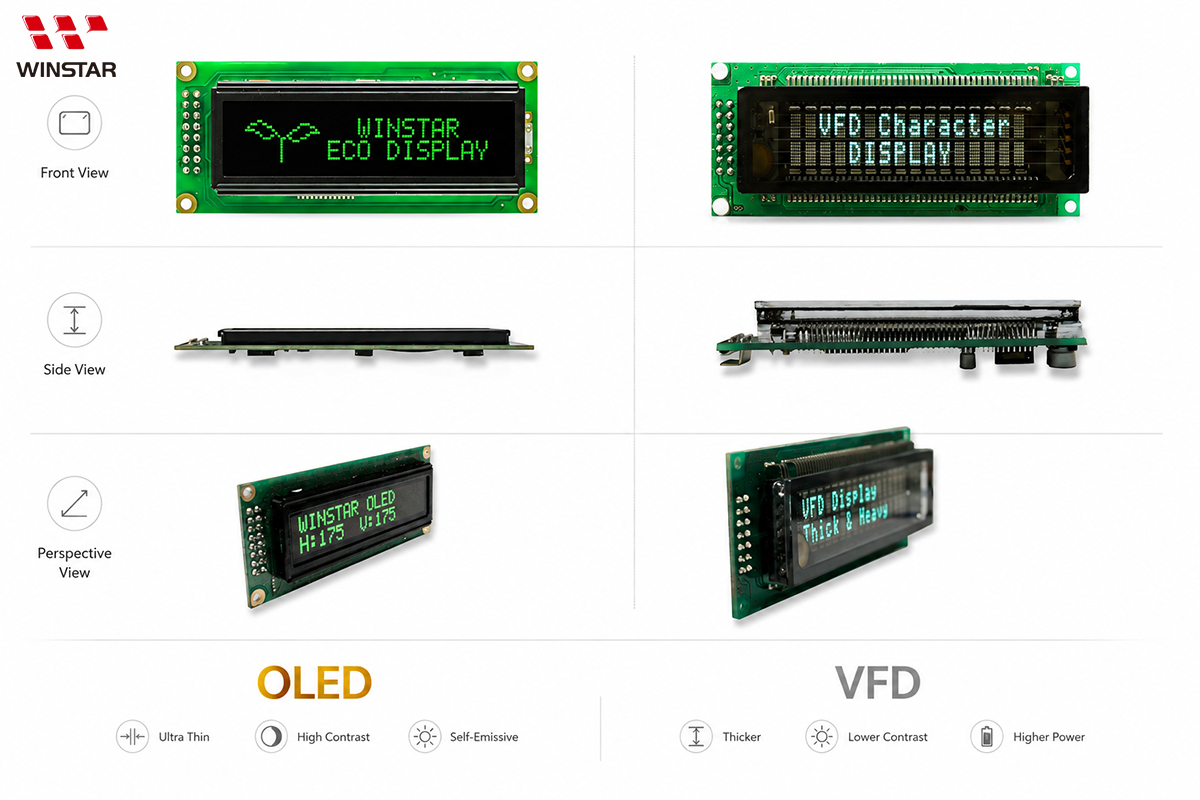 Figure 2: Comparison of VFD and PM-OLED Modules
Due to these limitations, the market has been actively seeking alternatives to VFDs. WINSTAR provides PM-OLED module replacement solutions that effectively overcome the limitations of VFDs. As shown in [Table 1], replacing VFD modules with PM-OLED modules offers several advantages.
The most significant advantage is the substantially reduced module thickness. A typical VFD module is approximately 15 mm thick, whereas a COG PM-OLED module is only about 1.5 mm thick, making it approximately one-tenth as thick as a VFD module. This ultra-thin design is particularly beneficial for lightweight product applications.
PM-OLED modules also offer a wider range of display colors than VFDs. Because OLED is a self-emissive display technology, it provides a contrast ratio of up to 10,000:1, approximately ten times higher than that of a VFD module. In addition, the organic light-emitting layer of OLED has higher energy conversion efficiency, resulting in significantly lower power consumption—approximately 25% of that of a VFD module.
PM-OLED modules also offer a longer service life than VFD modules [Note 1]. In a VFD, the phosphor on the vacuum tube wall gradually deteriorates due to continuous electron bombardment, causing brightness to decay rapidly. The estimated service life of a VFD is approximately 30,000 hours. By comparison, PM-OLED modules provide a significantly longer service life: approximately 100,000 hours for yellow and green displays, and approximately 50,000 hours for white and red displays, representing 1.5 to over 3 times the service life of a VFD module.
Note 1: Service life is defined as the operating time until the display brightness decreases to 50% of its initial value.
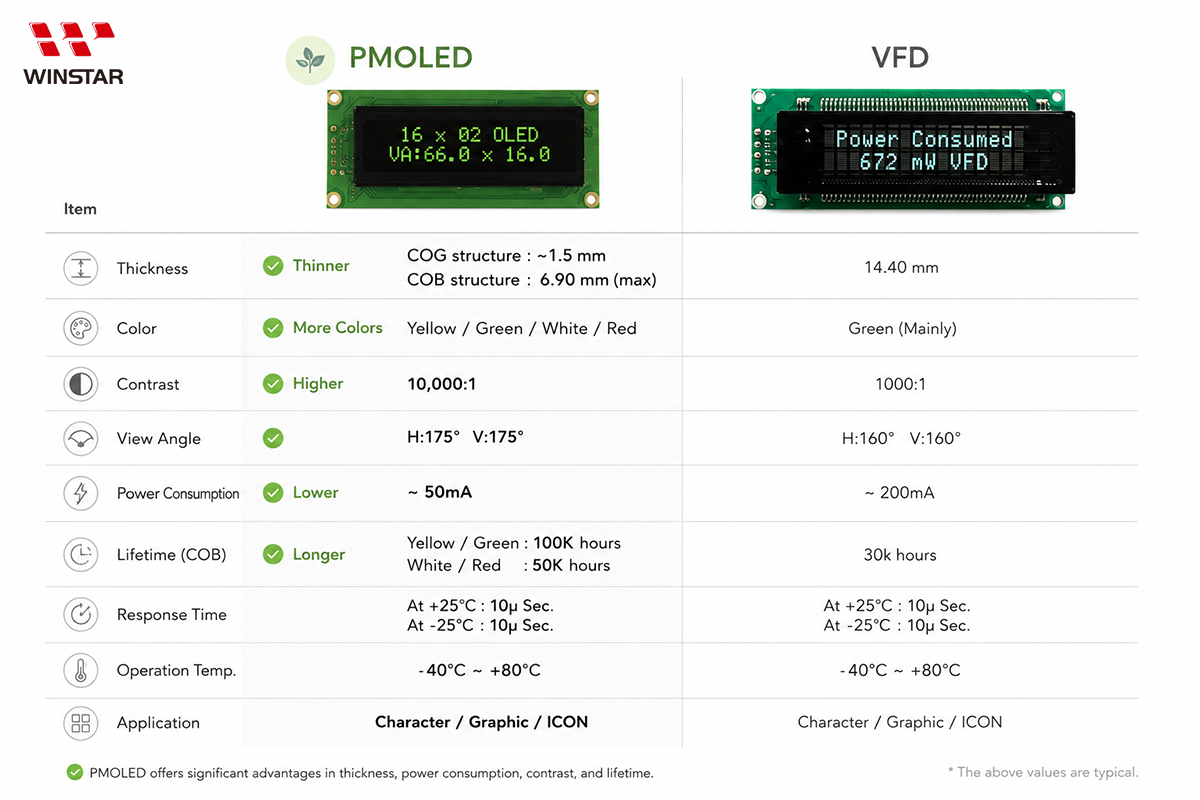 Table 1: PM-OLED vs. VFD parameter comparison
Many customers would like to replace their existing VFD modules with PM-OLED modules while retaining the existing product’s mechanical design, including the module appearance, thickness, and interface, as shown in [Figure 3].
WINSTAR can help customers develop customized PM-OLED modules that match the mechanical dimensions and electrical interface of the original VFD modules. Customers may also be able to select a suitable replacement from WINSTAR's standard PM-OLED product lineup. If the same module thickness is required, spacers can be added to the slim PM-OLED module. The display resolution and module interface can also be matched to the original VFD design, enabling fast plug-and-play replacement.
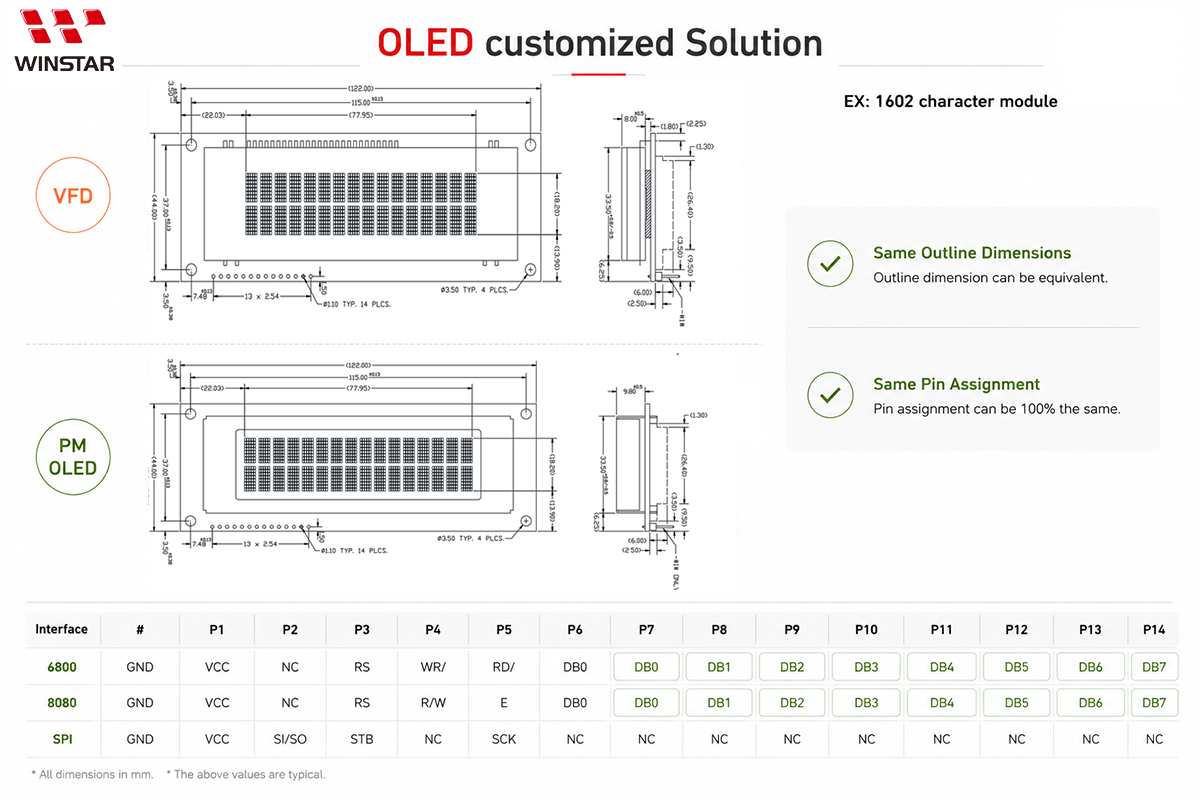 Figure 3: OLED Module Customized Solution Example