Startseite Produkte OLED-Anzeigen Touch-OLED-Display WEX025664B-CTP

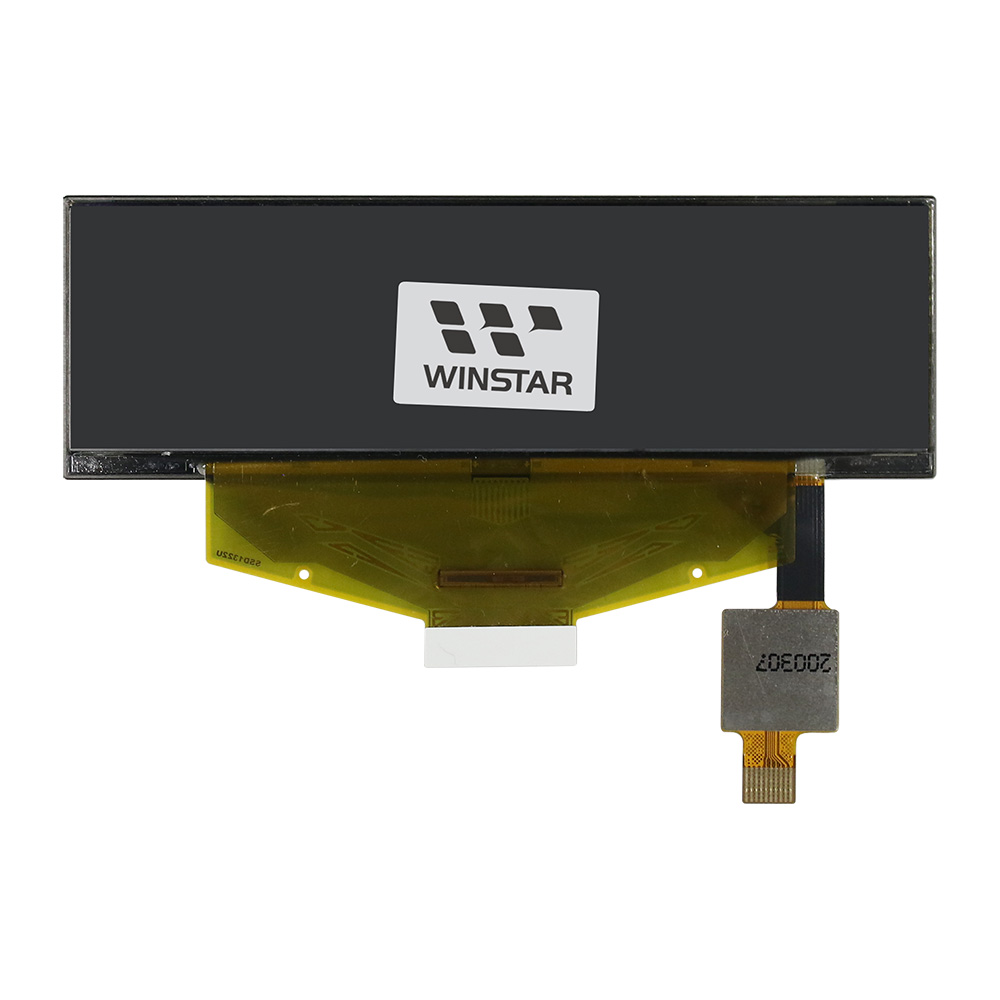
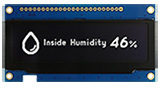
3,12-Zoll OLED-Display 256x64 mit CTP-Touch

Modellnummer WEX025664B-CTP

►Typ: Grafik
►Bauweise: COF
►Größe: OLED 3,12 Zoll
►256×64 Punktmatrix OLED
►IC:SSD1322
►3-V-Stromversorgung
►1/64 duty cycle
►Schnittstelle: 6800, 8080, SPI
►Touchscreen: Touchscreen Kapazitiv (CTP)
►Berührungspunkte : 1 Finger
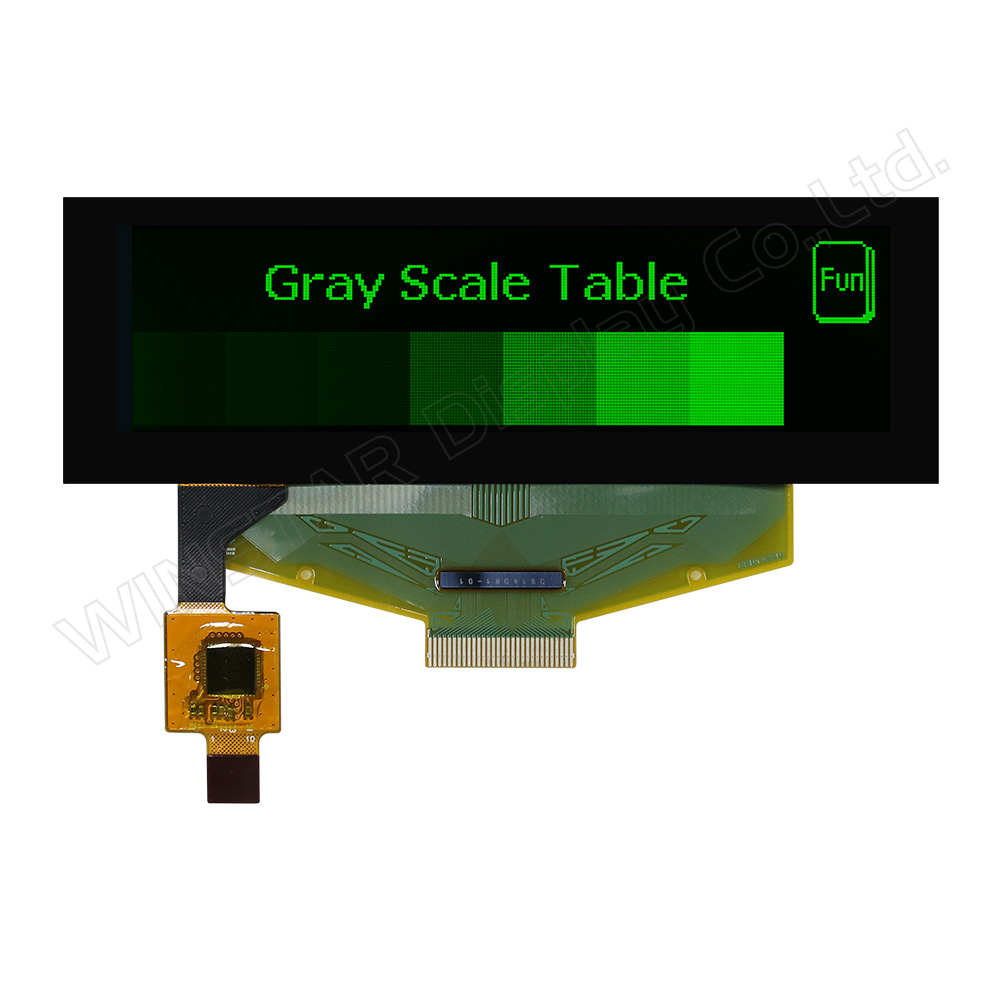
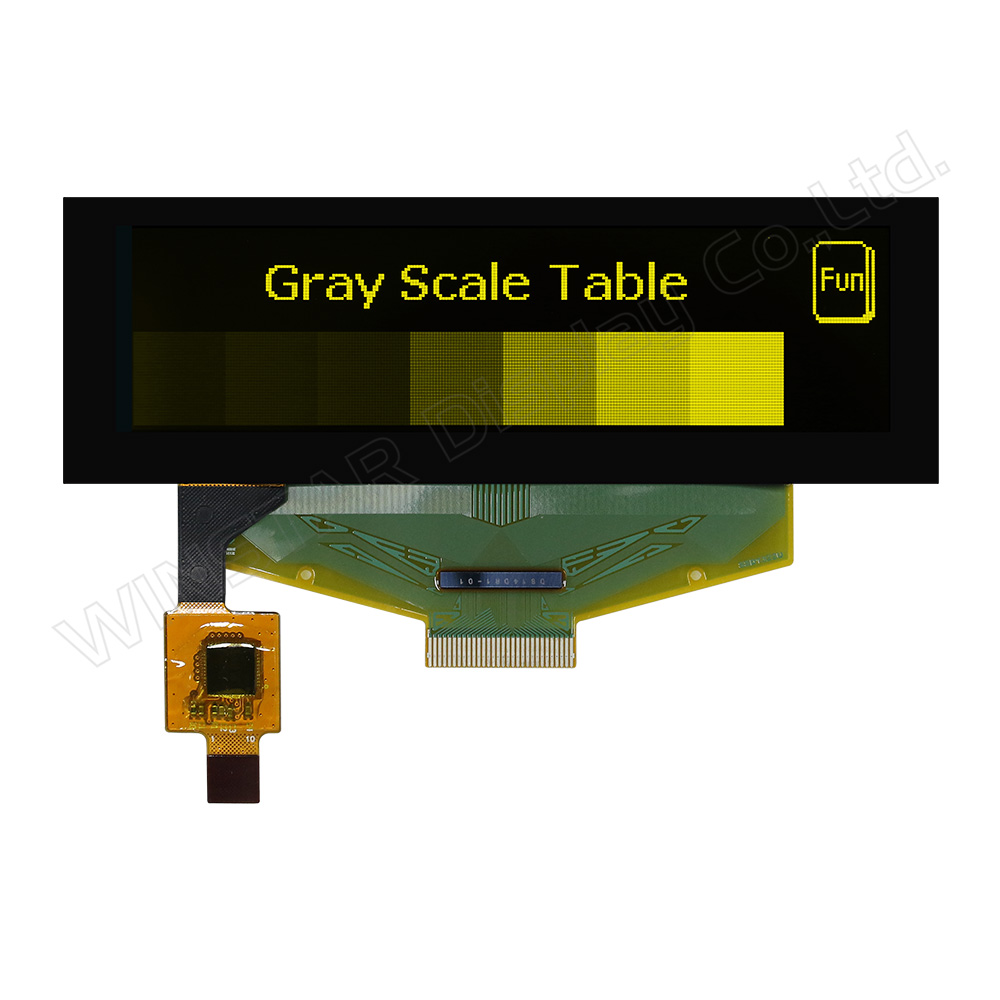
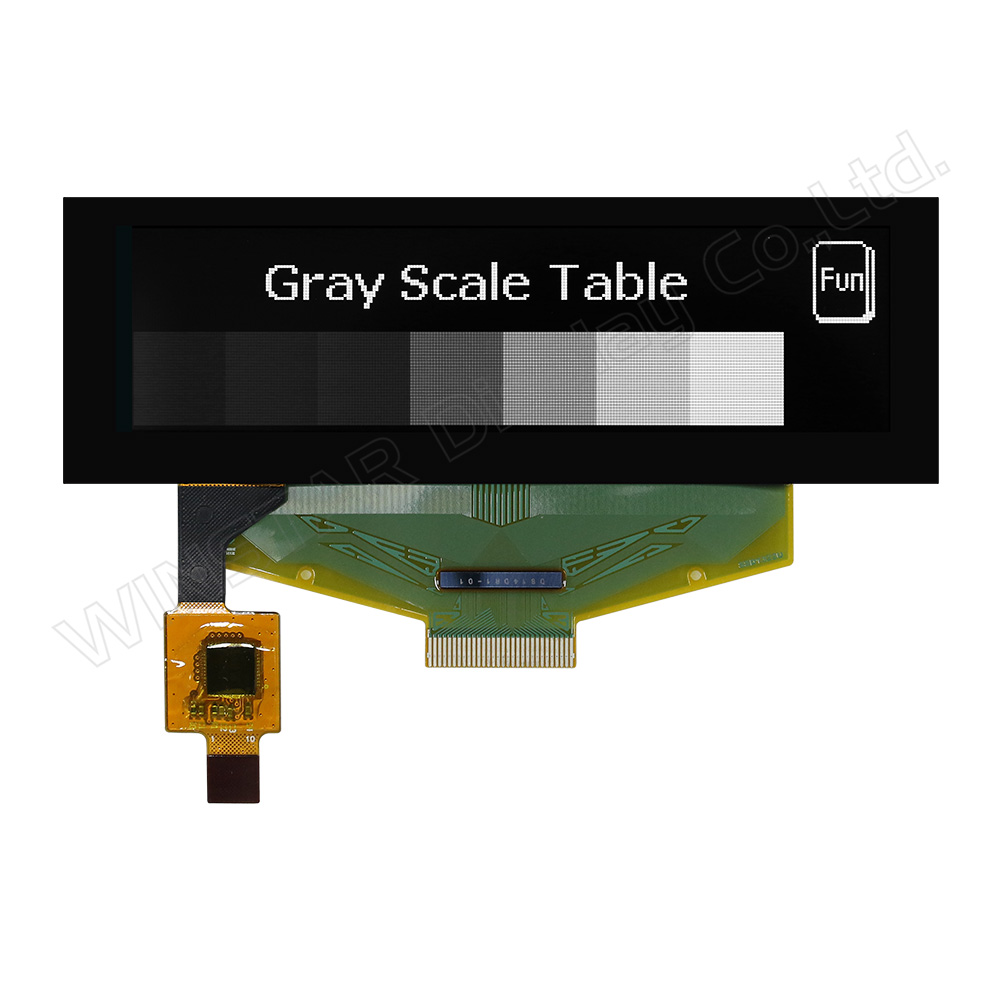
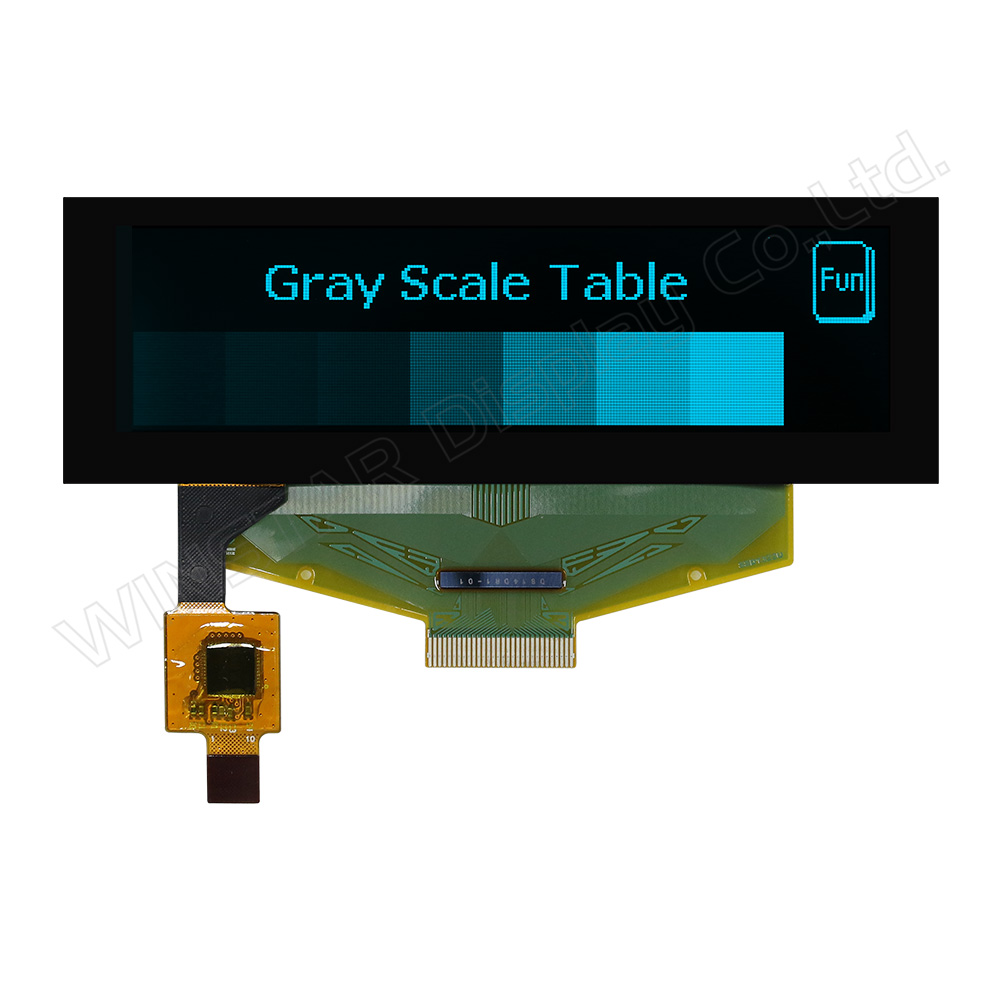
►Kolor wyświetlacza: Weiß / Gelb / Himmelblau / Grün
►Unterstützt Grauskala

Beschreibung

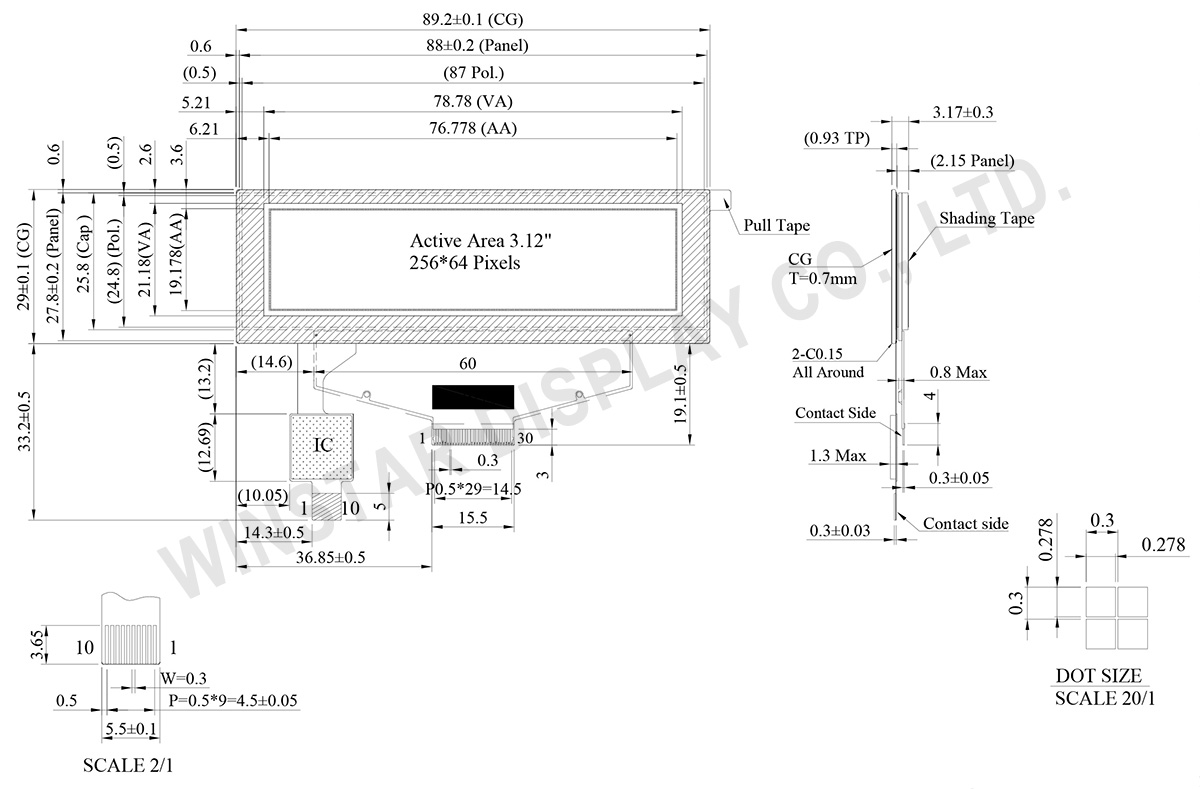
WEX025664B-CTP ist ein 3,12-Zoll großes grafisches OLED-Displaymodul in COF-Bauweise mit integriertem kapazitivem Touchpanel (CTP) und einer Auflösung von 256×64 Pixeln. Das Modul basiert auf dem SSD1322-Treiber-IC und unterstützt 6800/8080 8-Bit Parallel-Schnittstellen sowie 3-/4-Draht SPI. Die Modulabmessungen betragen 89,2 × 29,0 mm, die aktive Anzeigefläche 76,778 × 19,178 mm.

Das OLED-Modul unterstützt 4-Bit Graustufendarstellung und arbeitet mit einer Versorgungsspannung von 3,0 V (typ.) sowie einem 1/64 Duty-Ansteuerverfahren. Der Betriebstemperaturbereich liegt bei -20°C bis +70°C, der Lagertemperaturbereich bei -30°C bis +80°C. Das integrierte Touchpanel verwendet den FT6336U-Controller und unterstützt eine I²C-Schnittstelle sowie Einpunkt-Touch.

WEX025664B-CTP eignet sich für Anwendungen wie Wandgeräte, POS-Systeme, IoT-Geräte, tragbare Messinstrumente, Kommunikationssysteme und medizinische Geräte. Ebenso ist das Modul für Anwendungen geeignet, die von herkömmlichen STN-Displays auf OLED-Technologie umgestellt werden.

Weitere Varianten auf Basis desselben OLED-Panels sind ebenfalls verfügbar:


Zeichnung

3.12 inch 256x64 OLED Display with Touch Panel - WEX025664B-CTP

Data source ref: WEX025664BWPP3D00000

Technische Daten

Allgemeine Spezifikationen

Parameter Wert Einheit
Auflösung 256 × 64 Dots
Modulabmessungen 89.2 × 29.0 × 3.17 mm
Aktive Fläche 76.778×19.178 mm
Pixelgröße 0.278×0.278 mm
Pixelabstand 0.3×0.3 mm
Anzeigemodus Passive Matrix
Anzeigeart Monochrom
Ansteuerverhältnis 1/64 Duty
Graustufen 4 Bit
OLED-Treiber-IC SSD1322 (COF)
Schnittstellen 6800, 8080, SPI
Displaygröße 3.12 inch
CTP-Controller FT6336U
Erkennungspunkte 1
CTP-Schnittstelle I²C
Oberfläche Glanz

Grenzwerte (Absolute Maximum Ratings)

Grenzwerte

Parameter Symbol Min Max Einheit
Betriebsspannung VCI -0.3 4 V
Logikversorgung VDD -0.5 2.75 V
Versorgung für I/O-Pins VDDIO -0.5 VCI V
Versorgungsspannung Display VCC -0.5 20 V
Betriebstemperatur TOP -20 +70 °C
Lagertemperatur TSTG -30 +80 °C

Touch-Controller FT6336U

Parameter Symbol Min Max Einheit
Versorgungsspannung VDD -0.3 3.6 V

Elektrische Eigenschaften

Elektrische DC-Eigenschaften

Parameter Symbol Bedingung Min Typ Max Einheit
Betriebsspannung VCI Note 2.8 3.0 3.3 V
Versorgungsspannung Display VCC 14 14.5 15 V
Logikversorgung VDD 2.4 2.6 V
I/O-Versorgung VDDIO 1.65   VCI V
Hochpegel-Eingang VIH 0.8×VDDIO VDDIO V
Niedrigpegel-Eingang VIL 0 0.2×VDDIO V
Hochpegel-Ausgang VOH 0.9×VDDIO VDDIO V
Niedrigpegel-Ausgang VOL 0 0.1×VDDIO V
Betriebsstrom (50 % Checkboard) VCC = 14.5 V 32 48 mA

Touch-Controller FT6336U

Parameter Symbol Bedingung Min Typ Max Einheit
Versorgungsspannung VDD   2.8 3.0 3.3 V
Hochpegel-Eingang VIH   0.7xVDD VDD V
Niedrigpegel-Eingang VIL   -0.3 0.3xVDD V
Hochpegel-Ausgang VOH IOH = -0.1mA 0.7xVDD V
Niedrigpegel-Ausgang VOL IOH = 0.1mA 0.3xVDD V

Schnittstelle Pin-Funktion

No. Symbol Beschreibung
1 N.C. Reserved Pin
The N.C. pin between function pins are reserved for compatible and flexible design.
2 VSS Ground.
3 VCC Power supply for panel driving voltage.
This is also the most positive power voltage supply pin.
4 VCOMH COM signal deselected voltage level.
A capacitor should be connected between this pin and VSS.
5 VLSS Analog system ground pin.
6~13 D7~D0 Host Data Input/Output Bus
These pins are 8-bit bi-directional data bus to be connected to the microprocessor’s data bus.
When serial mode is selected, D1 will be the serial data input SDIN and D0 will be the serial clock input SCLK.
14 E/RD# Read/Write Enable or Read
This pin is MCU interface input.
When interfacing to a 68XX-series microprocessor, this pin will be used as the Enable (E) signal. Read/write operation is initiated when this pin is pulled high and the CS# is pulled low.
When connecting to an 80XX-microprocessor, this pin receives the Read (RD#) signal. Data read operation is initiated when this pin is pulled low and CS# is pulled low.
When serial mode is selected, this pin must be connected to VSS.
15 R/W# Read/Write Select or Write
This pin is MCU interface input. When interfacing to a 68XX-series microprocessor, this pin will be used as Read/Write (R/W#) selection input. Pull this pin to “High” for read mode and pull it to “Low” for write mode.
When 80XX interface mode is selected, this pin will be the Write (WR#) input. Data write operation is initiated when this pin is pulled low and the CS# is pulled low.
When serial mode is selected, this pin must be connected to VSS.
16 BS0 Communicating Protocol Select
These pins are MCU interface selection input. See the following table:
BS[2:0] Interface
00 4 line SPI
01 3 line SPI
10 8-bit 8080 parallel
11 8-bit 6800 parallel
Note
(1) 0 is connected to VSS
(2) 1 is connected to VDDIO
17 BS1
18 D/C# Data/Command Control
This pin is Data/Command control pin connecting to the MCU.
When the pin is pulled HIGH, the content at D[7:0] will be interpreted as data.
When the pin is pulled LOW, the content at D[7:0] will be interpreted as command.
19 CS# Data/Command Control
This pin is the chip select input connecting to the MCU. The chip is enabled for MCU communication only when CS# is pulled LOW.
20 RES# This pin is reset signal input.
When the pin is pulled LOW, initialization of the chip is executed.
Keep this pin pull HIGH during normal operation.
21 FR This pin is No Connection pins. Nothing should be connected to this pin. This pin should be left open individually.
22 IREF Current Reference for Brightness Adjustment
This pin is segment current reference pin. A resistor should be connected between this pin and VSS. Set the current lower than 10uA.
23 N.C. Reserved Pin
The N.C. pin between function pins are reserved for compatible and flexible design.
24 VDDIO Power Supply for I/O Pin
It should be matched with the MCU interface voltage level.
25 VDD Power Supply for Core Logic Circuit
Power supply pin for core logic operation. A capacitor is required to connect between this pin and VSS
26 VCI Power Supply for Operation
VCI must always be equal to or higher than VDD and VDDIO.
27 VSL Voltage Output Low Level for SEG Signal
This is segment voltage reference pin.
When external VSL is not used, this pin should be left open.
When external VSL is used, this pin should connect with resistor and diode to ground.
28 VLSS Ground of Analog Circuit
These are the analog ground pins. They should be connected to VSS externally.
29 VCC Power Supply for OLED Panel
These are the most positive voltage supply pin of the chip. They must be connected to external source.
30 N.C. Reserved Pin
The N.C. pin between function pins are reserved for compatible and flexible design.

CTP Pin Function

1 GND Ground
2 VDD Power Supply Voltage of CTP
3 INT External interrupt to the host
4 SDA I2C data input and output
5 SCL I2C clock input
6 RST External Reset, Low is active
7-10 GND Ground.
go top
close

Wir schätzen Ihre Privatsphäre

Durch Klicken auf „Alle Cookies zulassen“ stimmen Sie der Speicherung von Cookies auf Ihrem Gerät zu, um die Navigation auf der Website zu verbessern, die Nutzung der Website zu analysieren und unsere Marketing- und Leistungsbemühungen zu unterstützen. Weitere Informationen zu diesem Thema finden Sie in unserer Richtlinie. Datenschutzrichtlinie

Wir schätzen Ihre Privatsphäre

Winstar und bestimmte Drittparteien verwenden Cookies auf www.winstar.com.tw. Die Einzelheiten zu den Arten von Cookies, ihrem Zweck und den beteiligten Drittparteien sind unten sowie in unserer Cookie-Richtlinie beschrieben. Klicken Sie auf „Alle zulassen“, um unserer Verwendung von Cookies zuzustimmen und die bestmögliche Erfahrung auf unseren Websites zu erzielen. Sie können auch Ihre Präferenzen festlegen oder Cookies ablehnen (mit Ausnahme der unbedingt erforderlichen Cookies).

Einwilligungspräferenzen verwalten

Immer aktiv
Notwendige Cookies

Diese Cookies sind unerlässlich, um Ihnen das Navigieren auf der Website zu ermöglichen und ihre Funktionen zu nutzen, wie z. B. das Festlegen Ihrer Datenschutzpräferenzen, das Einloggen oder das Ausfüllen von Formularen.

Analyse-Cookies

Diese Cookies, auch als „Statistik-Cookies“ bekannt, sammeln Informationen darüber, wie Sie eine Website nutzen, z. B. welche Seiten Sie besucht und auf welche Links Sie geklickt haben. Siehe Details.